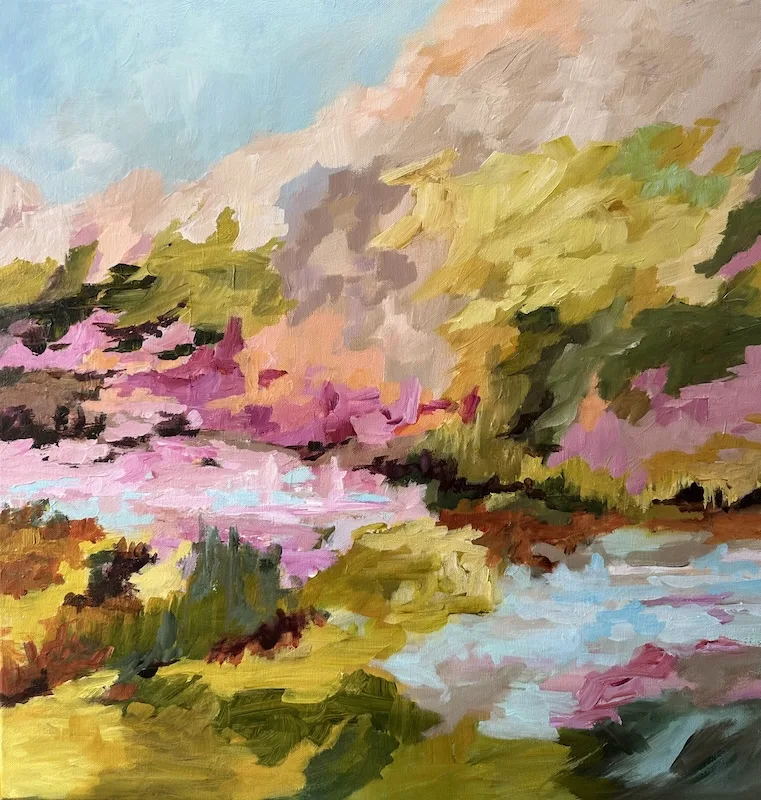
Sustainable oil painting
November 2025
It all began with the search for alternatives to the strong, pungent odor of turpentine. In line with the modern movement toward more sustainable living and working, paint specialists have continued their search for alternatives to the harmful metals in oil paint. Do you want to work sustainably as an artist? Fortunately, there are plenty of alternatives for healthier and cleaner painting!
Sustainable oil paint: better for the environment
More and more artists and hobbyists are choosing sustainable oil paint and odourless turpentine. Not only because these paints are better for the environment, but also because they are more pleasant to work with in the home, studio, or classroom. In this article, you’ll discover what makes these products special, why they are becoming increasingly popular, and how to use them optimally.
Eco-friendly oil paint
Sustainable oil paints are made with more environmentally friendly natural, mineral pigments, and plant-based, organic oils, and manufacturers use cleaner production processes. These paints do not contain harmful metals such as cadmium and cobalt, and are free of preservatives. Simply use water to dissolve the paint. Examples of these eco-paints include Talens’ Cobra, Winsor & Newton’s Artisan, and the Natural Earth Paint brand. These are all professional oil paints with the same high-quality pigments and thickness. Most brands also offer eco-friendly gesso, acrylic, and watercolor paints.
What are the advantages of natural and eco-friendly oil paint?
- More environmentally friendly: fewer toxic substances, lower carbon footprint.
- Healthier to work with: fewer harmful fumes.
- High quality: modern sustainable pigments have excellent lightfastness and tinting strength.
- Easy to clean: with soap and water.
- Animal-friendly: some brands are completely vegan.
Is sustainable oil paint just as good as traditional oil paint?
The answer is yes, modern sustainable oil paint offers comparable or even better tinting strength and lightfastness.
What is odourless turpentine?
Odourless turpentine is a purified form of traditional turpentine from which the strong-smelling aromatic hydrocarbons have been removed. The result is a cleaning and thinning agent without a pungent odour, ideal for painting indoors. Is odourless turpentine completely odourless? To be honest, the odour isn’t completely absent, but it is minimal.
Why do artists choose odorless turpentine?
- No strong odour: pleasant for working at home or in small spaces.
- Less irritating: gentler on the respiratory tract and skin.
- Effective: odourless turpentine thins oil paint and cleans brushes just as well as regular turpentine.
- Fits into sustainable working practices: some turpentine varieties are plant-based or biodegradable.
Combining sustainable oil paint with odourless turpentine
These two products are a perfect combination for those who want to paint in an environmentally conscious and comfortable way. Using sustainable oil paint in combination with an odourless solvent reduces both your ecological impact and exposure to harmful substances.
Tips for optimal use of sustainable oil paint
Start with thin layers and build up slowly, just as with traditional oil paint. Use odorless eco-turpentine sparingly: only for the initial undercoating or cleaning brushes. Combine with organic mediums such as linseed oil, walnut oil, or safflower oil. When using sustainable materials, always ensure good ventilation; even odorless products require air circulation!
Choose sustainable brushes
If you really want to paint sustainably, choose synthetic brushes suitable for acrylic, watercolor, oil, and poster paint. They are a sustainable alternative to traditional animal hair brushes, such as pig or sable hair, whose origins are often opaque. Sustainable brushes are made from synthetic fibers or responsibly sourced natural materials. Synthetic brushes are popular: they are completely animal-friendly and retain their shape well, even after intensive use. Cleaning is quick with soap and water because you can easily rinse off paint residue. Avoid rinsing down the sink; use a collection tray.
Eco-friendly brushes made from sustainably grown wood
Also, make sure the brush handles are made from sustainably grown wood. Sustainable brushes should be finished with a plant-based, non-toxic, environmentally friendly varnish. Read more about brushes.
Text and painting by Carola Siksma Ruiters
Want to learn more about painting art? Then read the other articles about painting art and techniques!