Conceptual art: a painter’s vision
November 2025
As a painter, I continually discover that art is more than pigment and form on canvas. In my studio, I often begin by searching for the right colour, the right light, or the perfect composition. But in the world of conceptual art, the focus shifts: here, the focus is not on the craft, but on the idea. And that is precisely what makes conceptual art so intriguing, challenging, and revolutionary. At the same time, conceptual art can be ambiguous and difficult to understand. In this article, I will explain what conceptual art is, provide historical background, and give you examples to better appreciate this movement.
What is conceptual art?
Conceptual art revolves around the concept, the thought, or the message behind the work. The physical artwork is merely a medium, sometimes even optional. An installation, text, video, or object can be conceptual art, as long as it conveys the underlying idea. While traditional painting often focuses on aesthetics, technique, and material, conceptual art poses a critical question: What is art, really? And who determines that?
How did conceptual art come into being?
One of the precursors of conceptual art was Marcel Duchamp from France. He turned everyday objects into art objects, the so-called ‘ready-mades’. A good example was his submission of ‘Fountain’ to an exhibition of the Society of Independent Artists (SIA) in New York, which he co-organized in 1917. It involved a signed, quarter-turned urinal that he had submitted under a different name (R. Mutt). The committee members found the work inappropriate, and it was rejected. Incidentally, art historians claim that this work was created by a different artist.
Characteristics of conceptual art
For anyone delving into conceptual art, these are the most important characteristics:
- The idea is central: the thought is more important than the form, material, or execution.
- It utilizes various media: paintings, installations, text art, ready-mades, video, performance. The space surrounding the artwork is also important.
- A critical, thought-provoking approach: the work raises questions about art, society, or perception. Humor is often used to poke fun at something.
- Interactive and experimental: as a viewer, you sometimes become part of the artwork.
- Breaking with tradition: conceptual art defies classical rules and formulas.
More examples of conceptual art
The conceptual art movement took further shape in the 1950s and 1960s with artists like sculptor Sol Lewitt, who declared that he didn’t start a work of art with a form, but with an idea, a concept. A well-known artwork is one of his few paintings, Red Square from 1962. It consists of nine squares in red and white with texts such as ‘white letters’ and ‘red square’. With this, he forces viewers to reflect on what they see.
In 1965, Joseph Kosuth, an American artist and photographer, presented ‘One and Three Chairs’, on display at the MoMA in New York. The work consisted of a wooden chair, a photograph of a chair, and a print of the dictionary definition of ‘chair’. Kosuth philosophically demonstrated that every object can exist in different ways. With the word ‘One’ in the title of the work, the artist refers to the chair as an idea and as an abstract concept.
The French artist Yves Klein is known for his paintings and sculptures made of a monochromatic ultramarine blue, which he called ‘International Klein Blue’. He found this colour so intense that he wanted to spread it everywhere and exhibited his works in Milan in 1957.
Marina Abramović from Serbia is known for her performance art. At the MoMA in New York, she sat on a chair for three months in 2010, allowing visitors to sit opposite her and look into her eyes.
American sculptor Jenny Holzer aims to convey words and ideas in public spaces with her work. Her works include large installations, billboards, projections on buildings and sculptures, and illuminated electronic displays, such as those on display at the Guggenheim Museum in Bilbao.
Modern art and the shift from form to idea
In the development of modern art, we increasingly see artists experimenting with new media and different ways of thinking. Conceptual art has reinforced this shift: it shifted the focus from form to idea. In principle, every work of art is based on a concept, but conceptual artists indicate that the concept itself is an art form. Although my own work is visually driven, I recognize the influence of this way of thinking on many contemporary painters, including myself. The idea behind a work is now at least as important as its execution.
Why conceptual art is and remains relevant
In a time when information is constantly flooding the air, conceptual art offers space for reflection. A work of art doesn’t have to be beautiful; it confronts, raises questions, and fosters discussion. Precisely because the idea is paramount, conceptual art can expose social themes such as identity, sustainability, politics or technology in a sharp way. For visitors and collectors, conceptual art is often a stimulating experience. It invites interaction and interpretation, and each viewer experiences a different meaning. Conceptual art was and remains a source of inspiration for new movements such as minimalism, neo-dada, pop art, surrealism, and abstract expressionism.
Buying conceptual art: why is there so much interest?
Art lovers, collectors, or galleries looking to buy conceptual art are often looking for art with a strong substantive message or a work of art that sparks conversation. It goes beyond a decorative work. Conceptual art responds to social debates and challenges the public to give meaning to what they see. Conceptual works remain relevant because they are not dependent on fashion trends, but on ideas. And for the private buyer: a conceptual work usually fits well in modern interiors!
How I view conceptual art as a painter
As a painter, I strongly believe in the rich diversity within the art world. Conceptual art and painting don’t have to be opposites; they can reinforce each other. Where painting makes something tangible, the conceptual artist makes art conceivable. Both perspectives complement each other. Conceptual art can inspire painters to think beyond composition and technique, to search for the meaning of what they paint. It reminds me that art is not only experienced visually, but also mentally. It is precisely this tension between form and idea that makes the dialogue between different movements within modern art so valuable.
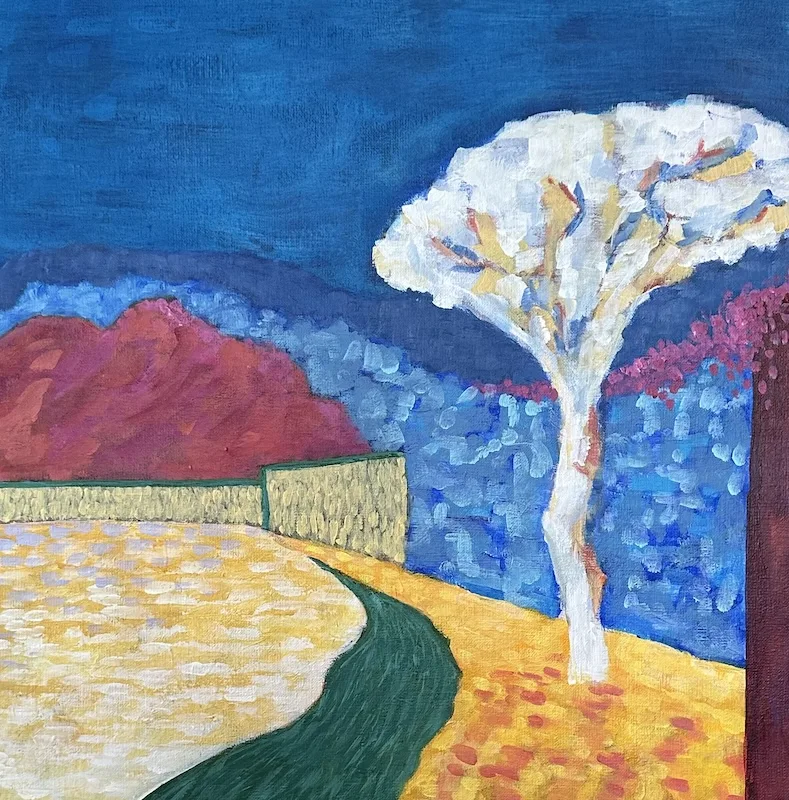
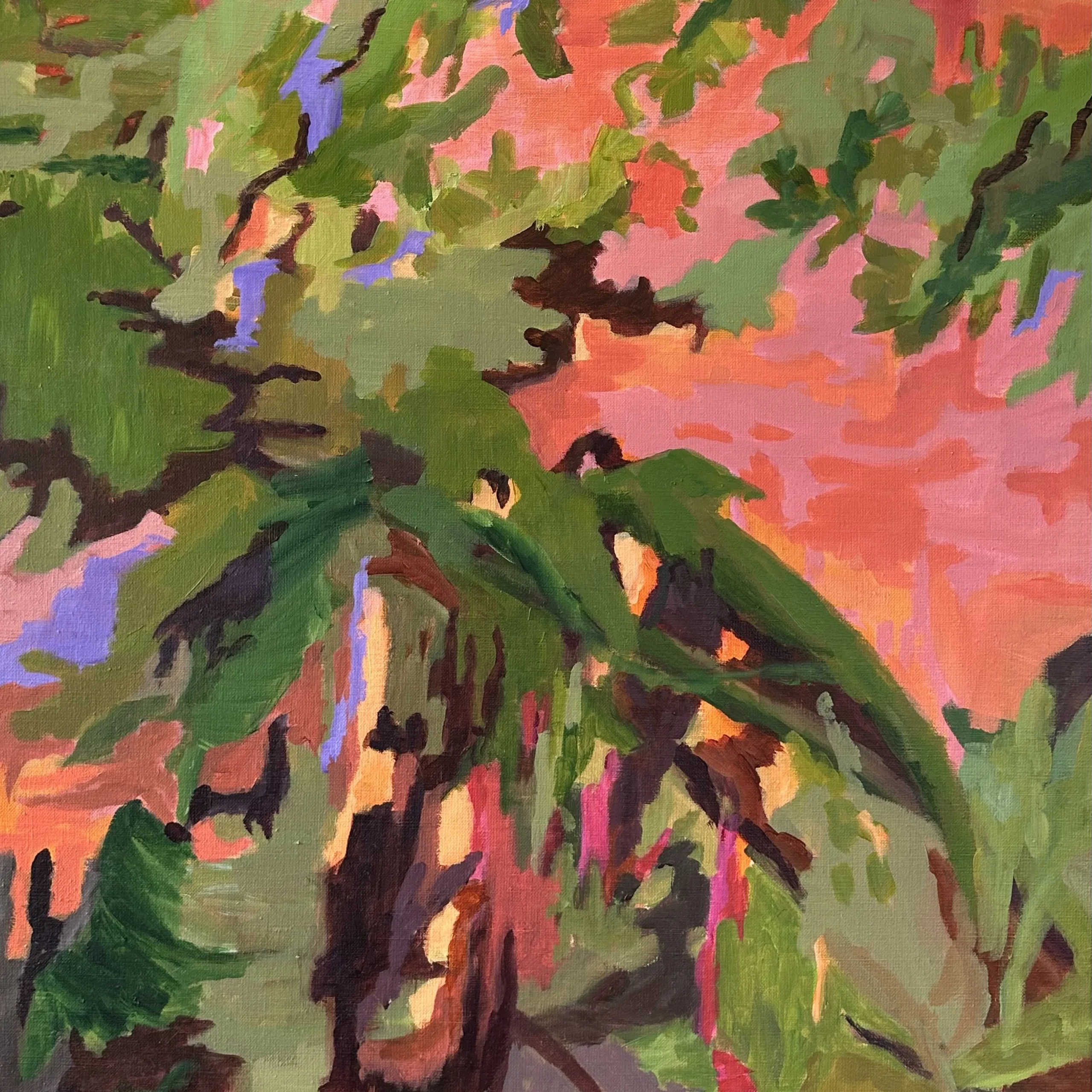
Text and painting by Carola Siksma Ruiters
Want to learn more about painting art? Then read the other articles about painting art and techniques!