How do you choose a subject for your painting? 10 ideas for inspiration
October 2026
You want to start painting, you have your paints and canvas ready, and then comes the question: ‘What am I going to paint?’ Choosing a subject for your painting can sometimes be surprisingly difficult. There are so many possibilities that you can end up not knowing where to start.
Speaking for myself, I usually have plenty of ideas up my sleeve. But after working towards an exhibition, I can sometimes feel completely empty of ideas. And that doesn’t have to be a bad thing at all. After an intense and creative period, it can be good to take some time to rest, create some distance and perhaps take a trip to a gallery or museum. At some point, new ideas will naturally start to bubble up again. I know that you can trust this process.
10 ideas for inspiration for your next painting
For anyone who could use a little help finding new ideas, I’ve put together some inspiration and suggestions in this article. Fortunately, you don’t always have to search for a particularly unusual or original subject. Inspiration for a painting can come from anywhere: nature, a photograph, a memory, a colour that catches your eye, or even something very ordinary.
Look to nature
Nature is not only an endless source of inspiration for me, but for many other painters too. Think of trees, flowers, clouds, water, mountains or a landscape near where you live. You don’t have to paint exactly what you see. Perhaps it is mainly the light, the colour or the atmosphere that appeals to you. An ordinary walk can suddenly provide you with a whole collection of ideas.
Tip: take photographs along the way of interesting places, colours and light. You can use them later as inspiration for a painting.
Paint a landscape
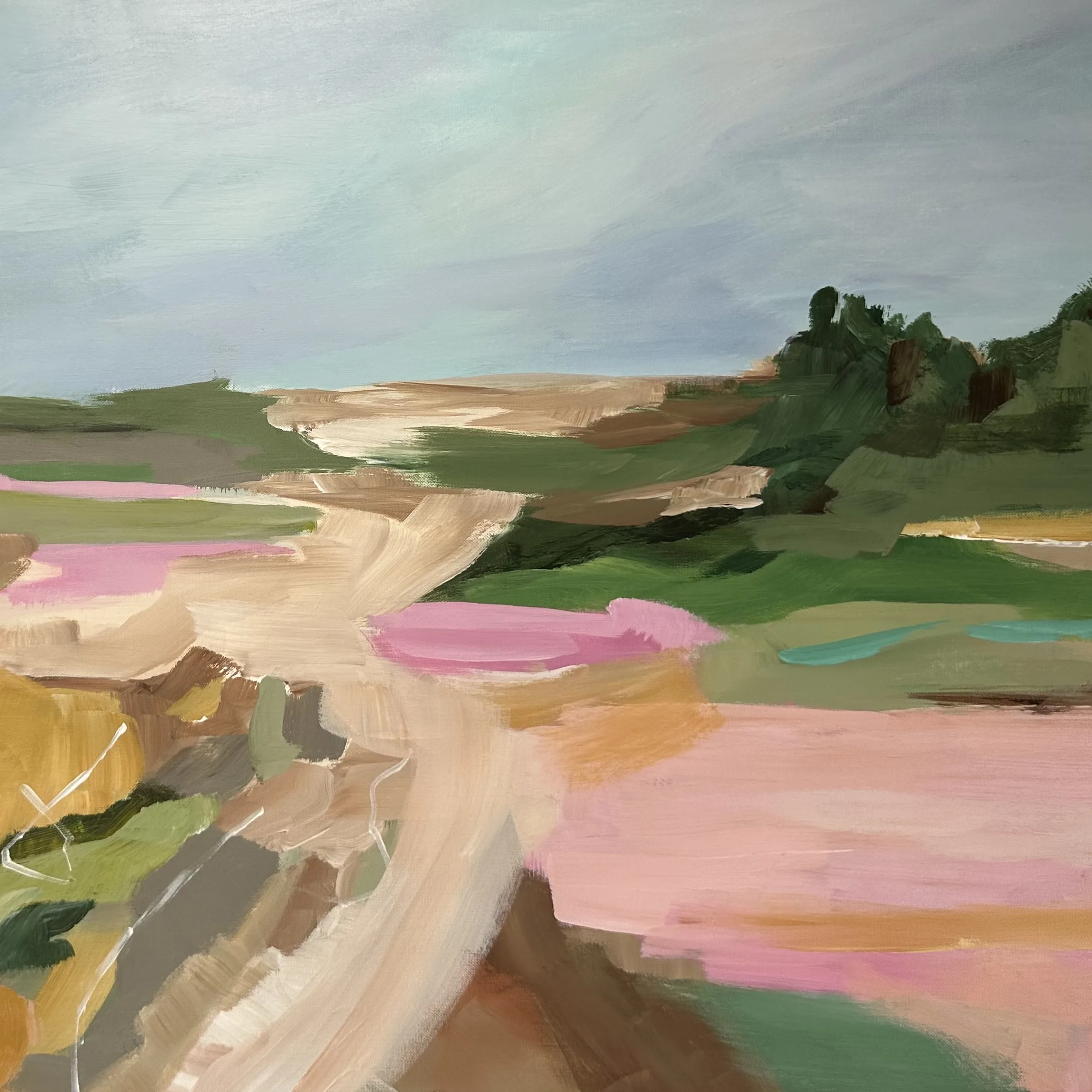
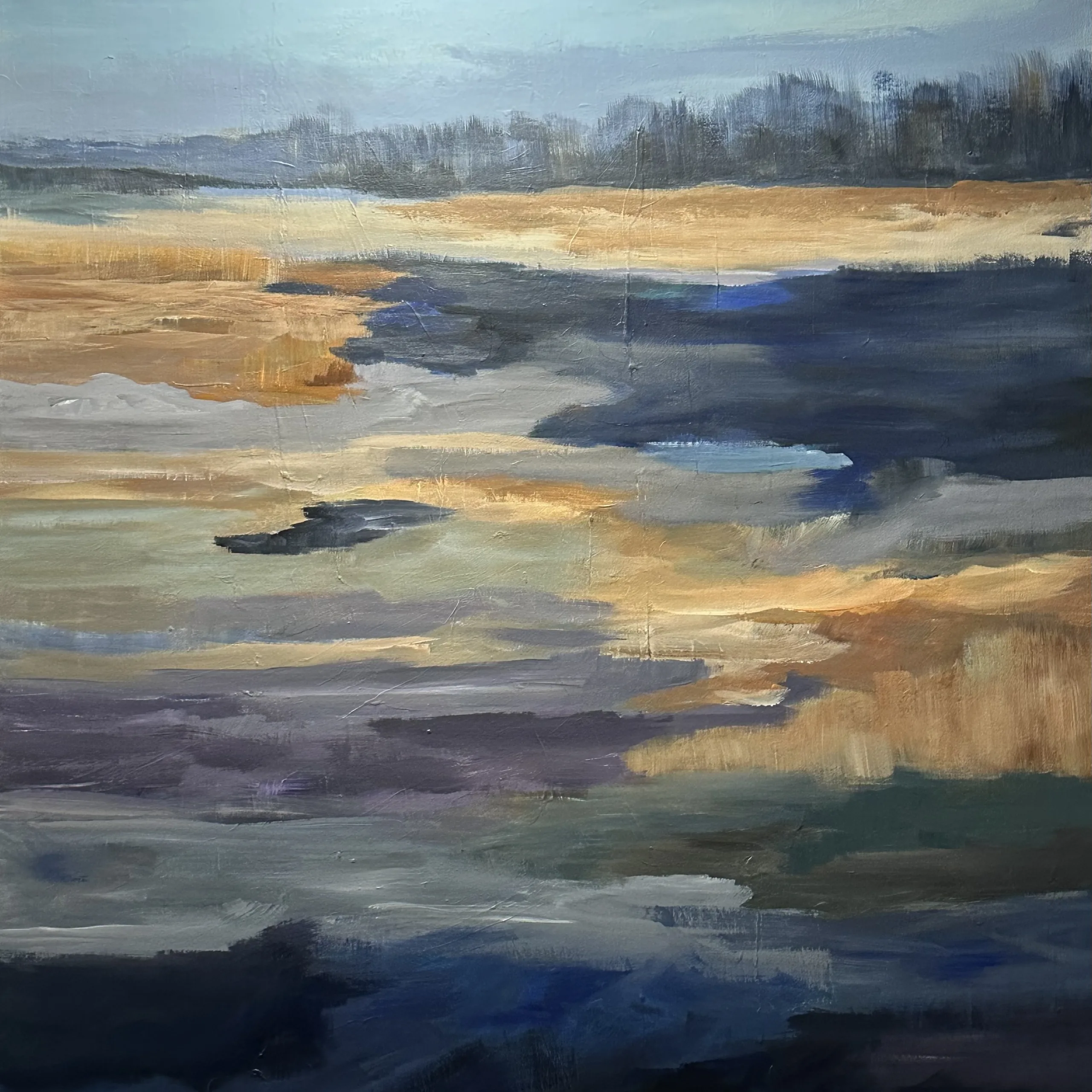
A landscape is a wonderful subject to practise with. You could paint a forest, beach, meadow, river or townscape. A landscape doesn’t have to be realistic either. You can play with colours, shapes and perspective and create your own interpretation of the scene. For example, you could paint: a beach with contrasting areas of sunlight and shadow, a mysterious misty forest, a colourful meadow full of flowers, beautiful evening colours in the sky, a peaceful lake with a distant background, a street in an old town. The possibilities are endless.
Use a photograph as inspiration
Do you have a beautiful holiday photograph, a picture of your garden or a striking photograph of an animal? Use it as a starting point for a painting. A photograph doesn’t have to become an exact copy of your painting. You can change, leave out or emphasise certain elements. Perhaps you love the colours in the photograph but want to change the composition. Or you could use just a small section of the photograph as inspiration.
Be aware of copyright when using photographs
Do be careful when using photographs. Ideally, use your own photographs. If you want to use a photograph taken by someone else, you should ask for permission first. This helps you avoid copyright problems. There can be exceptions where you have created a completely new composition or colour scheme in which the original photograph is no longer recognisable. However, copyright can be a complicated area, so when in doubt, always check whether you have permission to use the image.
Let colour inspire you
Sometimes a painting doesn’t begin with a subject, but with a colour or a particular atmosphere. Perhaps you see a beautiful combination of blue and green, warm earthy tones, or bright red combined with pink. Use those colours as your starting point and see what develops. You could create a colour palette first and then look for a subject that works with it. This can be particularly interesting if you want to paint more freely or explore abstraction.
Paint something from your own surroundings
You don’t have to travel far to find inspiration. Some great painters have created wonderful works in or close to their own studios. So, take a good look around you. A chair by the window, a vase of flowers, a cup of coffee, an old bicycle or a corner of your garden can all become interesting subjects. Ordinary things can make wonderful paintings when you pay attention to light, colour, shadow and composition. Try looking at an everyday object from an unusual angle. It can immediately create a completely different image.
Make an animal your subject
Animals are popular subjects for paintings. A pet, horse, bird, cat or dog can become the basis for a very personal painting. You can paint an animal realistically, but you can also experiment with loose brushstrokes, unusual colours or a more abstract style. A photograph of your own pet can also make a wonderful starting point for a personal work of art.
Find inspiration in your memories
A painting doesn’t only have to show what you can see right now. You can also paint a memory. Think of a favourite holiday destination, a house where you used to live, a special garden or a place you love visiting. For some people, this may seem like quite a challenge, but you don’t have to depict the memory literally. Perhaps capturing the atmosphere is enough. A painting based on a memory can become much more personal than a painting that simply shows a beautiful image.
Find inspiration in art
Look at paintings by artists you admire. Visit a museum, see an exhibition or browse through an art book. Don’t just look at what the artist has painted, but also how they have painted it. Which colours have they used? How is the painting composed? Where does your eye go first? How has the artist represented light? You can use these observations to develop your own painting style further. It’s not about copying an existing painting, but about discovering what appeals to you and learning from what you see.
Choose a theme
Do you find it difficult to choose just one subject? Give yourself a theme. A theme provides direction and often makes it easier to come up with ideas. You could choose themes such as flowers, the sea, the seasons, animals, portraits, travel, townscapes, landscapes, close-up details. light and shadow etc. You could even create a series of paintings around one theme. This creates a sense of connection between your works and can be a wonderful way to explore an idea in greater depth.
Just start and see where the painting takes you
Perhaps the most important tip of all is this: you don’t always need to know exactly what you are going to paint before you begin. Just start with a few colours, shapes or brushstrokes. While you are painting, an idea may emerge that you hadn’t thought of beforehand. Especially when you paint abstractly or intuitively, it can be interesting not to plan everything in advance. Allow the painting to develop during the process.
How do you know which subject is right for you?
If you still can’t choose between all these ideas, it can help to ask yourself a few questions.
What do I like?
Choose a subject that you enjoy looking at.
What gives me energy?
Painting takes time. A subject that genuinely interests you will help keep you motivated for longer.
Which colours do I want to use?
Sometimes a colour palette can be the starting point for choosing your subject.
What do I want to learn?
Would you like to practise painting light, perspective, skin tones or water? Choose a subject that allows you to develop that particular skill.
What atmosphere do I want to create?
Think about calmness, happiness, mystery, warmth or perhaps tension. The atmosphere you want to create can help you decide on a subject.
There is no such thing as the perfect subject
Perhaps the most important thing is not to put too much pressure on yourself. A painting doesn’t have to be perfect or extraordinary straight away. A subject that interests you today may feel completely different tomorrow. And by trying out different subjects, you gradually discover what suits you and your own way of painting. So, pick up your brush, take a good look around you and start painting. Inspiration is often much closer than you think. The most important thing is that your subject makes you curious enough to want to paint it and that you’re looking forward to it!
Read more articles on SchilderWiki
Text and image by Carola Caprice